 Krishna Kaanth M
- AEO case studies examples show how brands win answer boxes by matching search intent, structuring answers clearly, and building trust signals AI engines can extract.
- The strongest results usually come from BOFU content, question-led formatting, schema, and source-backed explanations that make content easy to cite.
- Featured snippets and AI Overviews reward concise answer nuggets, strong entity authority, and pages that solve a buyer’s problem faster than competitors.
- Our framework emphasizes revenue-first AEO, not vanity visibility, so the goal is qualified demand, pipeline influence, and measurable citation growth.
- Case studies matter because they prove what works across industries, reduce buyer uncertainty, and shorten the path from research to implementation.
Q1: What Is Answer Engine Optimization?
Answer Engine Optimization AEO is the practice of structuring content so AI systems can understand, cite, and surface it as a direct answer in platforms like ChatGPT, Claude, Perplexity, and Google AI Overviews.
We frame AEO as a trust and clarity problem, not just a ranking problem, because the answer engine is deciding which sources deserve to be quoted and reused.
For a deeper foundation on the topic, this section can naturally link to our AEO 101 hub, our AEO overview, and our AEO vs SEO guide.
Why AEO matters for brands
AEO matters because buyers are increasingly asking AI tools for recommendations, comparisons, and next-step guidance before they ever visit a website.
That means the brands most likely to win are the ones that present clear, extractable, and credible answers in the format AI systems prefer.
When we treat AEO as a content and trust architecture, we create more opportunities for brand mentions, citations, and qualified demand.
Q2: How Does Claude Select Sources?
Claude tends to reward content that is easy to parse, clearly structured, and supported by evidence that feels authoritative and specific.
In practice, that means the content needs to answer the user’s question directly, show expertise, and make it obvious why the source should be trusted over alternatives.
This is where our technical GEO implementation, schema markup basics, and E-E-A-T for AEO thinking becomes important.
When we build for Claude, we also think about broader platform behavior through our Anthropic Claude optimization service and our GEO service.
What Claude seems to reward
Claude is more likely to use sources that feel complete, transparent, and consistent with the query intent.
That usually includes pages with clean headings, concise answer blocks, well-labeled sections, and supporting proof that reduces uncertainty.
For brands in B2B SaaS, this often means a strong combination of GEO/AEO for AI SaaS and GEO/AEO for financial services style trust signals, depending on the category.
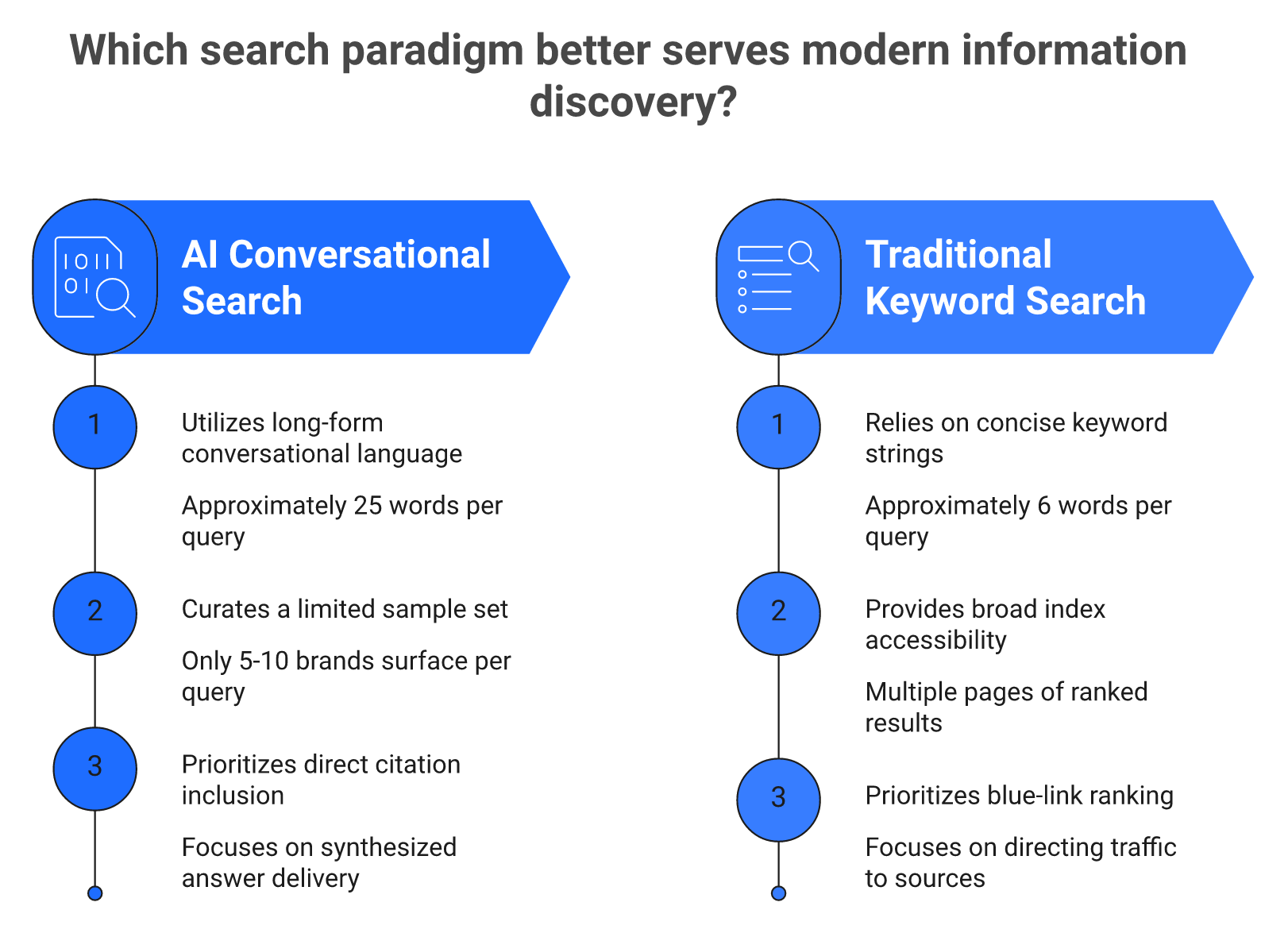
Q3: What Do Winning Featured Snippet and AI Overview Pages Have in Common?
Winning pages usually share the same core traits: clear answer-first writing, clean structure, strong topical depth, and enough credibility signals for the system to reuse them confidently.
They also reduce friction for the reader, which matters because the same clarity that helps AI extract the answer also helps humans trust it.
That is why our AEO implementation checklist, AEO measurement metrics, and GEO content optimization resources map so well to AI search performance.
For a stronger content system, we also connect these pages with GEO topic clusters and GEO content refresh.
Structural patterns that work
The most reusable pages are usually organized around one clear topic, then supported by question-led subheads, bullet points, and short explanatory paragraphs.
This makes it easier for answer engines to identify the core answer, the supporting context, and the evidence behind the claim.
It also improves the page experience for buyers who are evaluating whether your team understands the space deeply enough to trust.
Q4: How Should Brands Optimize Content for Claude AI Search?
Brands should optimize for Claude by writing content that is specific, evidence-backed, and built around the exact questions buyers ask during evaluation.
That means moving beyond generic SEO copy and toward content that explains concepts, compares alternatives, answers objections, and makes the business case clearly.
Our process connects naturally to answer engine optimization, GEO strategy framework, and large language model optimization.
For teams publishing at scale, programmatic SEO service and content marketing service can support the editorial system behind that optimization.
What to include on-page
Use clear headings, concise answer blocks, and relevant supporting detail that helps an AI system understand the page quickly.
Include named entities, internal references, proof points, and language that matches the buyer’s actual vocabulary.
For teams using Webflow, our Webflow SEO guide and technical SEO guide help make that structure easier to publish and maintain.
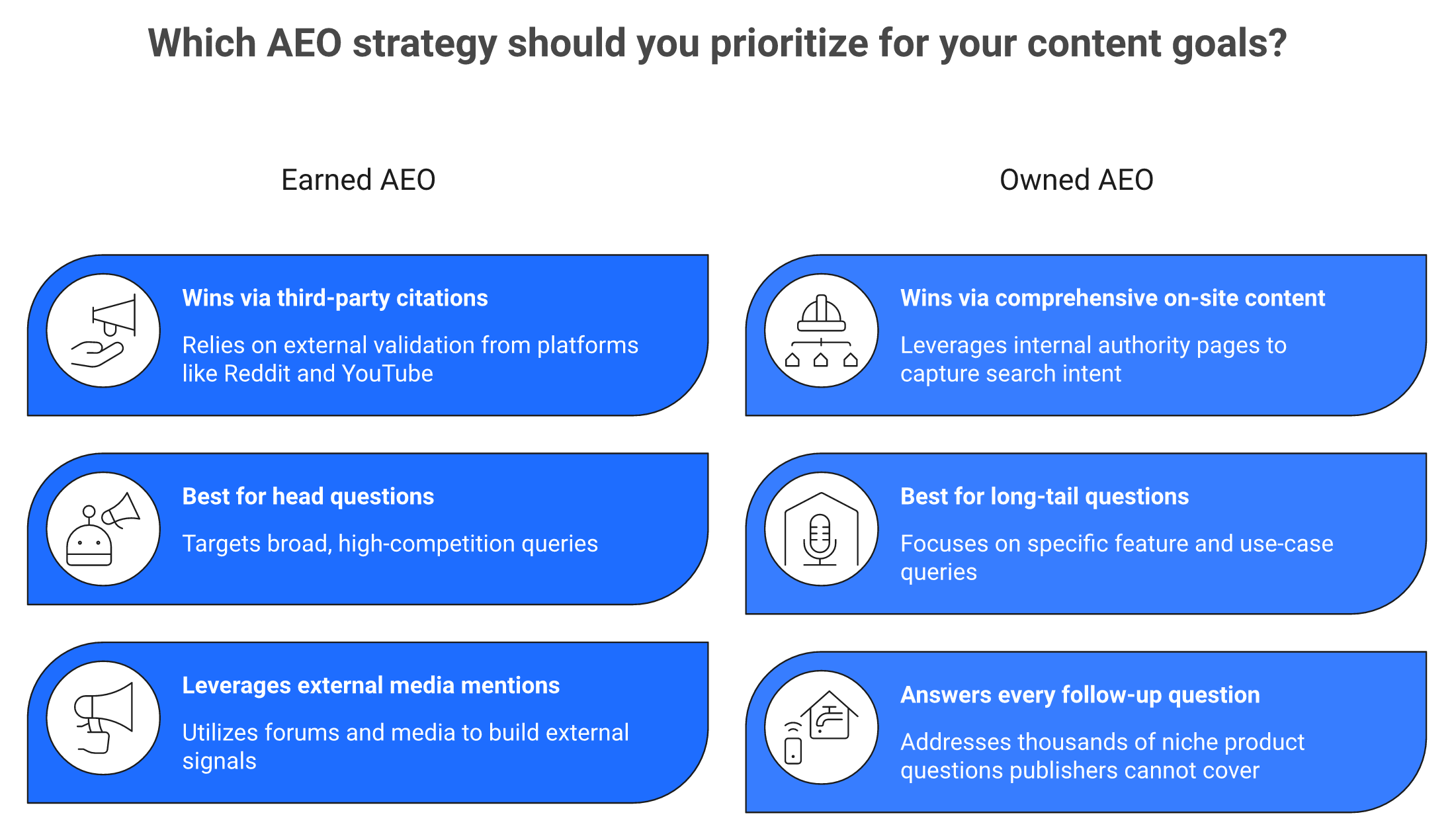
Q5: What Trust Signals Does Claude Prioritize, and How Do You Build Them?
Claude prioritizes trust signals that reduce uncertainty, including clear expertise, consistent messaging, evidence of real experience, and a page structure that makes verification easy.
We build trust by showing who we are, what we know, how we work, and why our claims should be believed.
That is why our E-E-A-T for AEO work sits alongside ethics and bias in GEO, GEO compliance and privacy, and trust-first content playbook.
It also connects with our broader AI SEO service and B2B SEO service offerings, where trust and authority matter as much as traffic.
How we build trust signals
We use founder voice, primary-source logic, clearly named methodology, and proof that is specific enough to be verified.
We also make sure the site architecture reinforces the same story through related pages, internal links, and consistent terminology.
When the content is aligned across the site, the brand becomes easier for both humans and AI systems to understand.
Q6: What Mistakes Do Brands Make When Trying to Rank in Claude?
The most common mistake is treating Claude like a traditional search engine and copying old SEO tactics without adapting to AI search behavior.
Another mistake is publishing generic, AI-generated content that lacks real perspective, evidence, or a clear point of view.
We see stronger outcomes when brands avoid those shortcuts and instead use GEO vs traditional SEO, GEO failures and lessons, and AEO challenges as guardrails.
For content teams building around community signals, Reddit & forum AEO is a useful complement when used authentically.
Why these mistakes happen
Many teams still optimize for impressions and rankings instead of citations, mentions, and qualified pipeline.
That mindset leads to content that looks optimized on the surface but fails to answer the actual question well enough to be reused.
We also see teams underestimate the importance of internal structure, which is why technical SEO & website audit work matters so much before any AI search push.
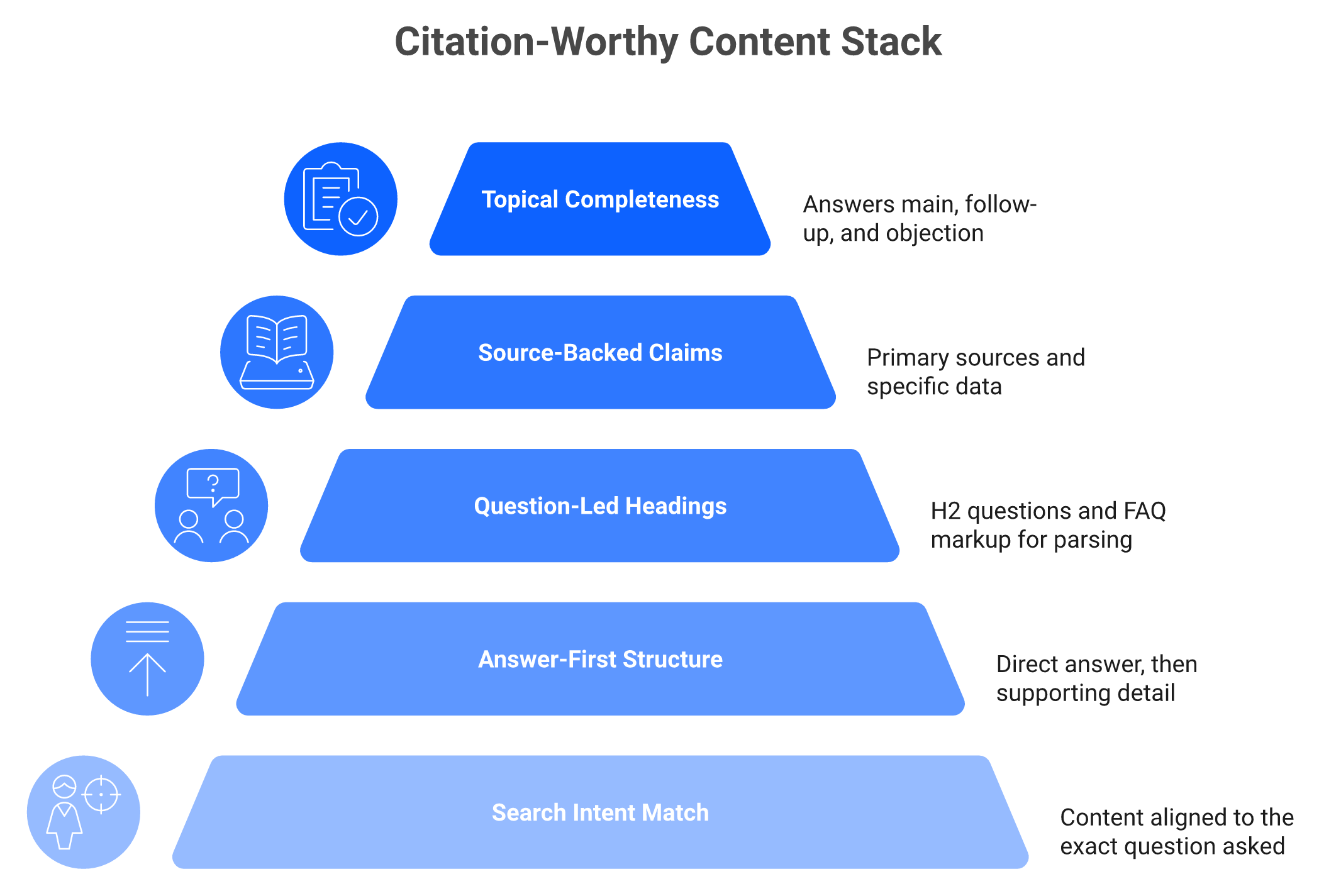
Q7: How Do You Measure Claude AI Visibility and Track Results?
Claude visibility should be measured by share of voice, citation rate, and the business impact of being surfaced in AI answers.
We do not treat clicks and impressions as the full story because AI answers can influence demand even when users do not click immediately.
That measurement mindset connects directly to our AI search visibility and brand mention tracking, GEO measurement and metrics, and AEO measurement metrics pages.
It also supports the broader reporting framework in our AI Visibility Gap 2026 benchmark.
Metrics that matter
Track how often your brand appears across prompt variants, which platforms cite you, and whether those appearances map to downstream revenue signals.
We also watch how citation patterns change over time, because AI search visibility is dynamic and highly sensitive to content quality and authority.
This is where our GEO ROI & revenue attribution framework becomes useful for leadership teams.
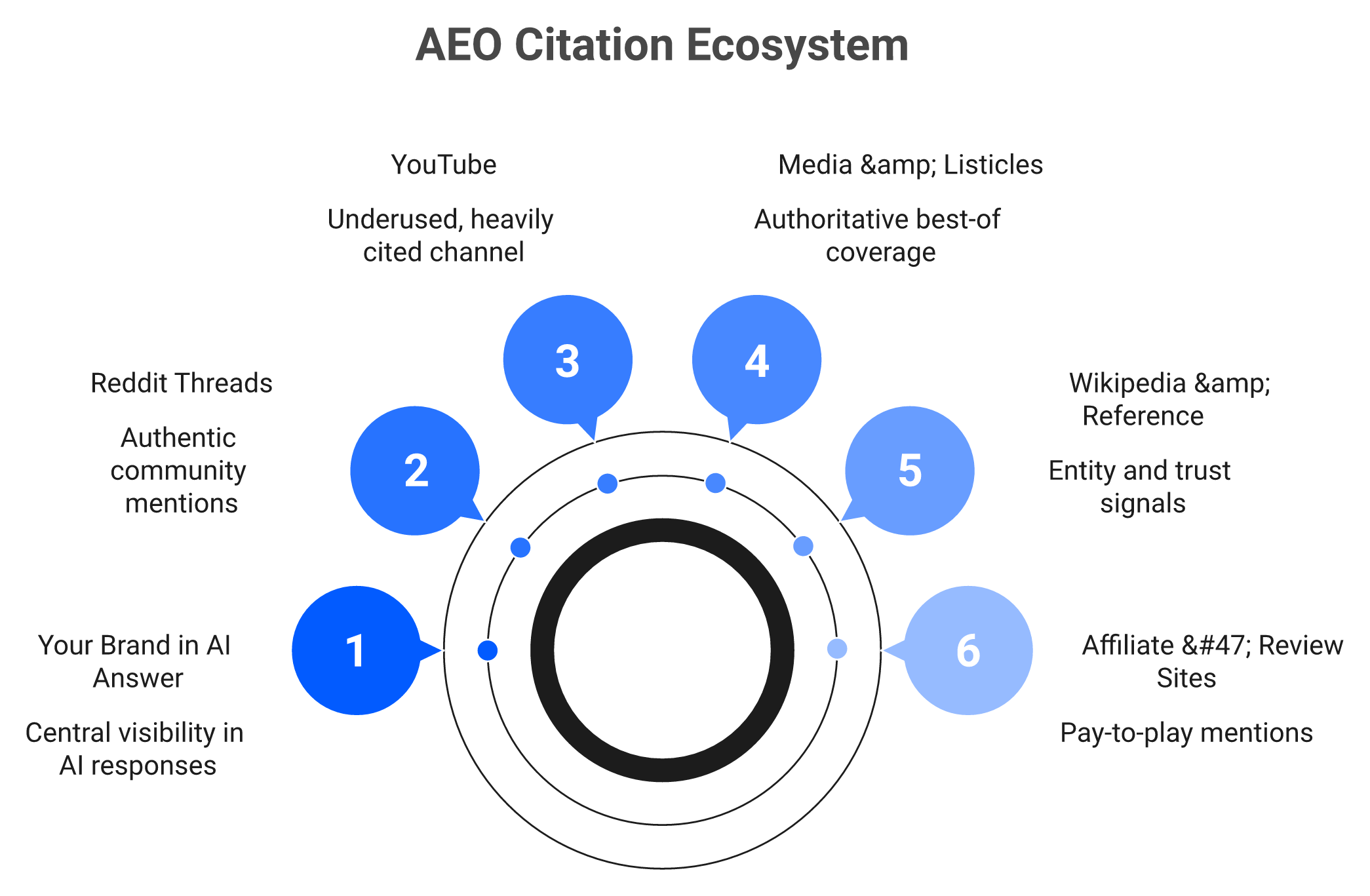
Q8: How Long Does It Take to See Results from Claude Optimization?
Results can begin with early visibility improvements in weeks, but meaningful traction usually takes longer as authority, content depth, and citation consistency build over time.
We set expectations around compounding rather than instant wins, because AI search tends to reward consistency and trust accumulation.
That is why this section pairs well with future trends in GEO, GEO case studies and success stories, and case studies collection.
For teams evaluating scope and timing, pricing and contact us provide the next step once the strategy is clear.
How we frame timelines
We usually separate early technical and content wins from deeper authority gains so stakeholders understand what changes first and what compounds later.
That helps leadership avoid unrealistic expectations while still giving the team a measurable path forward.
For buyers comparing solutions, our B2B SaaS buyer journey in AI search and zero-click search brand economy research add useful context.
Q9: Which Industries Benefit Most From Claude AI Optimization?
Industries that benefit most from Claude optimization are the ones where buyers ask high-intent questions, compare vendors, and need trustworthy recommendations before they convert.
That includes B2B SaaS, financial services, e-commerce, cybersecurity, and other categories where evaluation happens across multiple touchpoints and platforms.
We support those use cases through GEO/AEO for AI SaaS, GEO/AEO for e-commerce, and GEO/AEO for financial services.
For category-specific discovery, our B2B SaaS AEO strategies, e-commerce product AEO, and cybersecurity AEO agencies pages reinforce the same approach.
Where Claude has the most leverage
Claude has the most leverage when the buyer wants a concise, credible answer instead of a long browsing session.
That makes it especially valuable for categories where trust, clarity, and comparison shape the buying decision.
It also makes cross-platform consistency important, which is why we connect Claude work with ChatGPT optimization, Perplexity optimization, and Google AI & Gemini optimization.
Q10: How Do We Turn Claude Visibility Into Revenue?
We turn Claude visibility into revenue by connecting visibility work to qualified demand, stronger consideration, and conversion-ready next steps.
That means the strategy cannot stop at being mentioned, it has to support the path from discovery to action.
For brands that want a broader revenue system, agentic commerce service, large language model optimization, and GEO ROI & revenue attribution help connect the dots.
When the fit is right, the next move is simple: contact us and we will map the opportunity together.
Revenue-focused approach
We optimize for the moments that influence buying decisions, not vanity metrics that look good in isolation.
That is how we align content, authority, and search visibility with pipeline outcomes.
It is also why our work often starts with the R-GEO revenue-focused framework and expands into a full topical system.
Q11: What Internal Linking Strategy Helps AI Search Performance?
Internal linking helps AI search performance by making the site’s topic structure easier to understand, crawl, and associate with related intent clusters.
We use internal links to connect service pages, educational hubs, case studies, and research assets so the site reads like a coherent system rather than isolated pages.
That is why we naturally connect to GEO 101 hub, AEO 101 hub, and SEO 101 hub across the content ecosystem.
We also reinforce commercial relevance with best AEO agencies, AEO agencies evaluation, and best GEO agency services.
How we place links
We place links where they support understanding, not where they interrupt it.
That usually means linking from conceptual explanations into deeper hubs, from proof sections into case studies, and from conversion sections into pricing or contact pages.
For AI search content, those paths help both readers and systems move through the topic in a logical way.
Frequently asked questions
What do AEO case studies examples actually prove?
AEO case studies examples prove that answer engine optimization is not theoretical. They show which content patterns, trust signals, and page structures helped brands earn featured snippets, AI Overviews, and citation visibility in real searches. For us, the value is not just the ranking win itself. The real proof is that the page answered a buyer question better than competing pages, used language AI systems could extract, and created enough authority for the engine to recommend the brand. That is why we treat every case study as a map of what the buyer journey looks like inside AI search. When we analyze examples, we look for patterns like: Clear answer-first formatting. Topic depth matched to search intent. Strong internal linking to supporting pages. Trust signals such as original research, FAQs, and schema. We also use these examples to connect visibility to business outcomes. See how we structure this thinking in our AEO case studies collection and our what is AEO guide.
How do brands win featured snippets with AEO?
Brands usually win featured snippets when they answer a question in the fastest, clearest, and most structured way possible. We see the strongest results when pages lead with a direct response, then expand with supporting detail, examples, and concise formatting that helps search systems isolate the best passage. In practice, that means the page should include a tight definition, a short list or step-by-step explanation, and enough context to satisfy the searcher without forcing them to hunt through the article. We also find that snippet wins improve when content aligns tightly with intent, especially for comparison, definition, and how-to queries. Our approach is to build answer-ready content around the exact question the buyer asks, then reinforce it with entity signals and internal links. That is why our content often uses supporting resources like our AEO keyword and question research guide and our AEO implementation checklist . When we do this well, the page does not just rank; it becomes the most extractable answer in the set.
What makes an AEO case study credible enough to trust?
A credible AEO case study needs more than a before-and-after claim. We look for context, baseline visibility, the specific actions taken, the timeframe, and the measurable outcome. Without those pieces, the example is just marketing copy. The strongest case studies explain what changed at the content level, what changed technically, and what changed in visibility. That lets buyers understand whether the result came from better answer formatting, better authority building, stronger internal linking, improved schema, or a combination of all four. We also believe credibility improves when the case study is tied to a clear buyer problem and a relevant category. For example, a SaaS founder wants to know whether AEO can help with product comparison pages, while a marketing leader may care more about AI Overview citations across high-intent queries. That is why we pair proof with method. You can see this approach in our GEO case studies and success stories and our E-E-A-T for AEO resource. Trust comes from specificity, not hype.
Do AEO case studies examples work for B2B SaaS brands?
Yes, and B2B SaaS is one of the strongest fits for AEO case studies examples because buyers research solutions through comparison, validation, and recommendation queries before they ever talk to sales. That makes AI answers and snippets a high-leverage place to influence demand. We see the best SaaS results when the content targets bottom-of-funnel intent such as alternatives, best tools, versus pages, implementation questions, and category selection queries. These are the moments when a buyer is already narrowing options, which means answer visibility can directly affect pipeline quality. For SaaS teams, the winning pattern is usually not a generic blog strategy. It is a focused system built around intent mapping, authority building, and content that reflects real buyer language. That is why we pair case study thinking with our B2B SaaS AEO strategies page and our GEO for SaaS startups resource. When SaaS brands use AEO well, they do not just get traffic. They get shortlisted earlier.
What metrics should we track in AEO case studies examples?
We track metrics that connect visibility to business value. That usually starts with snippet wins, AI Overview appearances, citation frequency, share of voice, and branded query growth. But we do not stop there, because visibility alone does not prove revenue impact. The next layer is qualified traffic, assisted conversions, demo intent, and pipeline contribution. In our view, the best AEO case studies examples show how a page moved from being invisible to becoming a cited source in buyer research, then translate that visibility into measurable commercial outcomes. We also recommend monitoring changes over time rather than isolated wins. AI search is dynamic, so a strong case study should show momentum across multiple prompts, not a single lucky result. That is why our measurement thinking aligns with our AI search visibility and brand mention tracking page and our GEO measurement and metrics guide. If the case study cannot connect answer visibility to buyer behavior, it is incomplete.
What content patterns show up in winning AEO case studies examples?
Winning AEO case studies examples usually share the same structural patterns. They use clear H2 question headings, direct answer blocks, supporting bullets, schema-friendly formatting, and content depth that matches the complexity of the query. They also use language that sounds like a real expert, not a generic content mill. We especially see success when pages include source-backed claims, comparison tables, and concise summaries that make extraction easier for AI systems. Another common pattern is topical completeness: the best pages answer the main question, the follow-up question, and the objection in one cohesive flow. That is why we design content around answer nuggets and supporting context. This makes the page useful to humans and readable for answer engines at the same time. To go deeper, we recommend our AEO implementation checklist and our schema markup basics guide. Patterns matter because AI engines reward pages that are easy to parse, easy to trust, and easy to cite.
How do we turn AEO case studies examples into a strategy?
We turn AEO case studies examples into strategy by extracting repeatable rules, not copying surface-level tactics. First, we identify the intent type behind each win. Then we map the page structure, trust signals, internal links, and topical depth that made the result possible. After that, we apply those patterns to our own priority pages. For us, the goal is to build a system: research the buyer questions, cluster them by intent, create answer-ready content, and support it with authority-building assets. That is how case studies become a roadmap instead of just a collection of stories. We also recommend prioritizing pages that can influence revenue fastest, such as comparisons, alternatives, implementation guides, and service pages. Those are the pages most likely to convert AI visibility into pipeline. Our AEO overview and our AEO vs SEO guide are useful starting points for translating examples into a practical roadmap. The best strategy is the one that repeats what works and ignores what does not.
Why do some AEO case studies examples fail to produce results?
Some AEO case studies examples fail because they focus on visibility tactics without solving the underlying authority problem. A page can be well formatted and still lose if the brand is weak, the content is thin, or the intent match is off. We also see failures when teams chase top-of-funnel traffic instead of buyer queries, or when they treat AEO like a copy-and-paste SEO exercise. AI engines do not reward that kind of generic work. They reward pages that are specific, trusted, and useful enough to cite. Another common issue is measurement blindness. If a team only checks rankings and never tracks citations, share of voice, or downstream pipeline, they miss the real signal. That is why our approach stays tied to revenue outcomes and platform-specific optimization. We frame this clearly in our AEO challenges page and our GEO failures and lessons resource. Failure usually means the system was incomplete, not that AEO does not work.