 Krishna Kaanth M
- When a Google AI Overview appears, clicks fall from 15% to 8% and only 1% click a link inside the summary, so ranking number one no longer guarantees the visit.
- The click is being repriced, not just removed; Seer found cited brands earn 35% more organic and 91% more paid clicks, so being named beats ranking.
- Traffic to ChatGPT, Perplexity, and Gemini is additive, not a clean replacement; the search pie is growing and AI is a new slice you must claim.
- SEO ranks a page, GEO earns citations across AI answers, and AEO makes you the direct answer; they stack rather than replace each other.
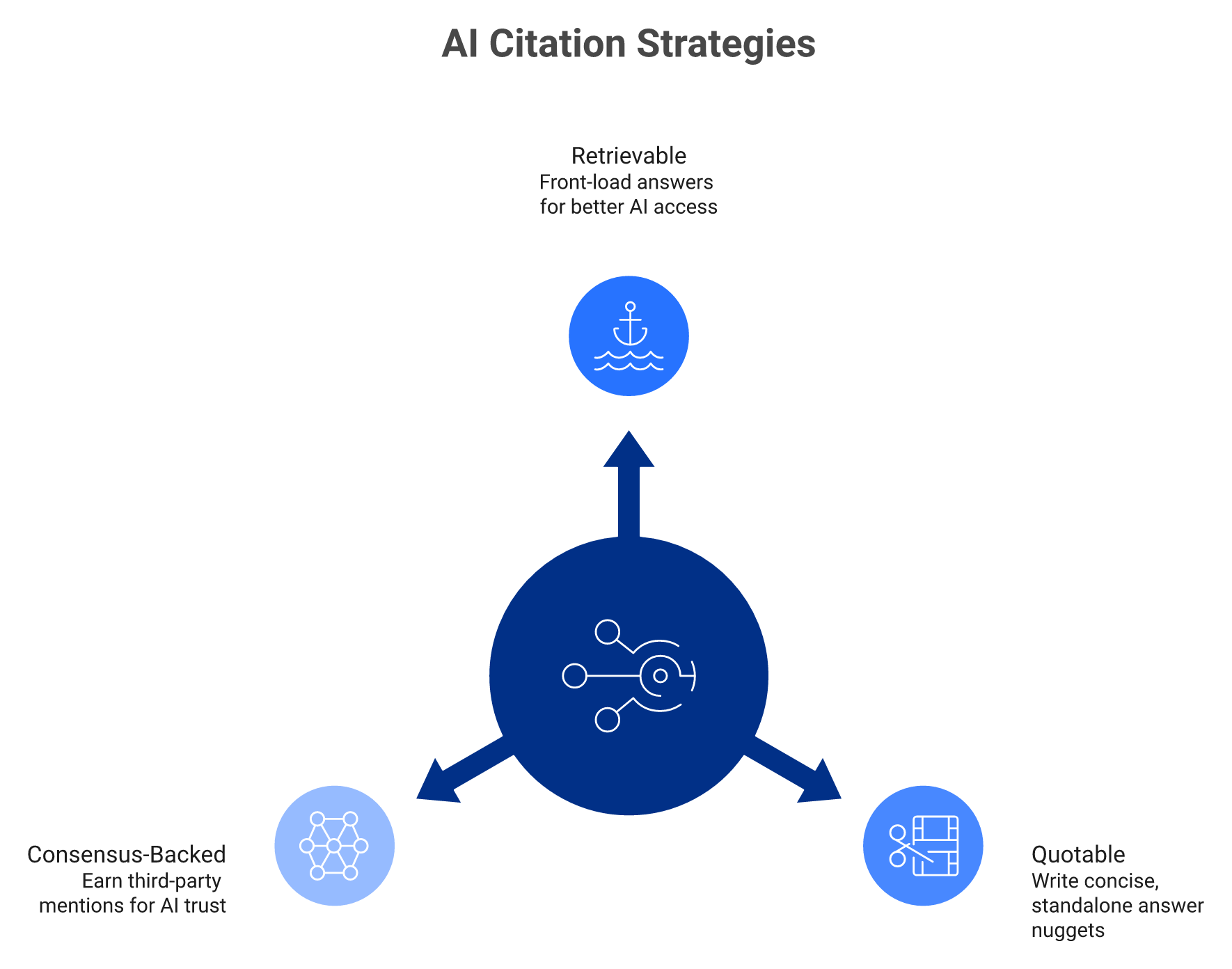
- To get cited, be retrievable, quotable, and consensus-backed: front-load answers into the first 30%, write 40 to 80 word nuggets, and earn third-party mentions.
- Measure share of voice, a GA4 AI-referral segment, and a How did you hear about us field, then map every layer to pipeline instead of impressions.
Q1. Why Are Your Google Clicks Disappearing Even When You Rank #1?
Your rankings are intact; your clicks are not. When a Google AI Overview appears, users click a traditional result only 8% of the time versus 15% without one, and just 1% click a link inside the summary (Pew, 2025). Ahrefs found the position-one page loses about 58% of its click-through rate. Ranking #1 no longer guarantees the visit. The answer box now intercepts it.
Picture a Head of Organic Growth opening Search Console on a Monday. Rankings look stable. Position one, position two, holding steady. Then she opens GA4, and organic sessions are down again. Nothing broke. No penalty hit. The traffic just stopped arriving.
📉 The metric that stayed green while revenue bled
This is the quiet part nobody warned her about. Click-through rate (the share of searchers who actually click your link) has detached from rank. You can win the ranking and still lose the click.
Over 70% of Google searches now end without a click to any website. The AI reads the page, writes the answer, and the searcher never leaves the results screen. This is exactly the shift our generative engine optimization work is built to address.
🧾 The "data donor" problem
Here is how one founder framed the fear to me. "Traffic is going down. Over 70% are zero-click searches. AI can just read my content, answer the question, and reroute the traffic to some other player who's paying them."
That is the trap. Your content trains the answer. Someone else gets the visit. You become a data donor, feeding a machine that never sends anyone back. Understanding the zero-click search brand economy is where the fix starts.
The Pew Research Center numbers make the mechanism concrete. Clicks fall from 15% to 8% the moment a summary appears. Only 1% of people click a source link inside that summary. The visit is not delayed. It is gone.
⚠️ Why "just rank higher" stopped working
The obvious fix, rank higher, does not save you here. Ahrefs measured a 58% CTR drop for the page sitting at position one when an AI Overview loads above it.
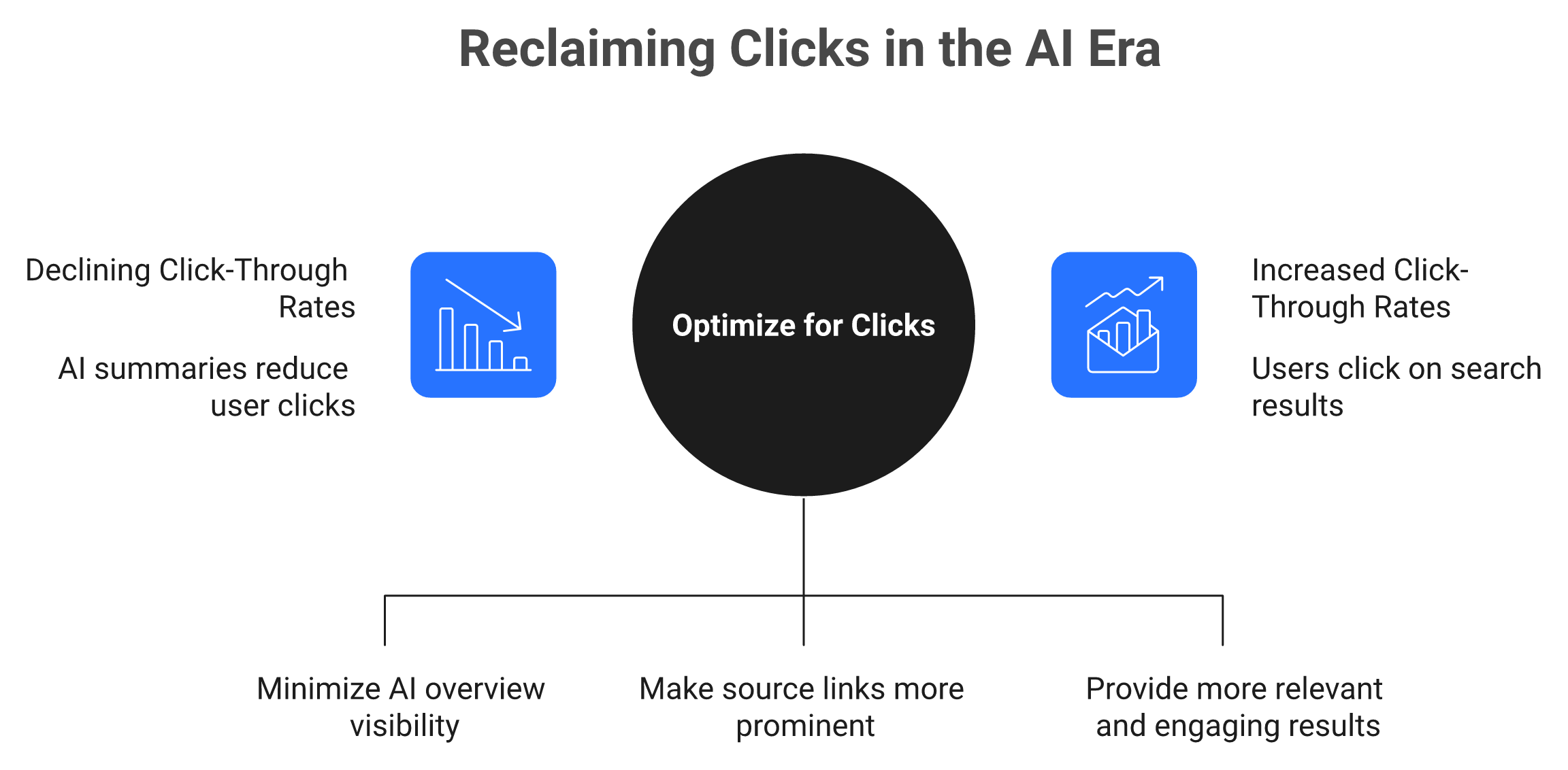
Even queries without an AI Overview are softening. Seer Interactive recorded a 41% CTR decline on those too, as search behavior shifts overall. No position is safe by default anymore.
So the real question changes. It is not "how do I rank back at the top." It is this: how do I stay the synthesized answer when the buyer's shortlist just shrank from hundreds of options to a single response box?
That reframe is the whole game, and it is where we point every client at MaximusLabs. We stop chasing the lost click and start engineering the brand to become the answer AI hands the buyer, not the link the buyer skips, through answer engine optimization.
Q2. What Exactly Is Happening to Click-Through Rates Across AI Search?
AI search is compressing clicks across the board. Pew found clicks fall from 15% to 8% when an AI summary appears. Seer Interactive measured a 61% drop in organic CTR and 68% in paid on AI Overview queries, and a 41% drop even on queries without them. But cited brands earned 35% more organic and 91% more paid clicks. The click is being repriced, not just removed.
Start with the conclusion, because it changes how you read every number below. The click is not simply vanishing. It is moving to whoever the AI decides to name.
📊 The three studies that tell the whole story
Three primary datasets now anchor this shift. Each measured a different slice, and they agree on direction. I have pulled them into one view so you can stop hunting across blog posts for the real figures, the same way our AI Visibility Gap 2026 benchmark consolidates the data.
| Study | What it measured | Headline finding |
|---|---|---|
| Pew Research Center (2025) | Real browsing, ~68,879 searches | Clicks fall from 15% to 8% with an AI summary; only 1% click inside it |
| Ahrefs (2026) | 300,000 keywords, Search Console CTR | Position-one CTR drops about 58% when an AI Overview appears |
| Seer Interactive (2025) | 3,119 informational queries, 42 brands | Organic CTR down 61%, paid down 68%, non-AIO queries down 41% |
💰 The number competitors bury
Most articles stop at the losses. They headline the 58% and the 61% and move on. That misses the finding that actually pays your salary.
Seer also measured the upside. Brands cited inside the AI Overview earned 35% more organic clicks and 91% more paid clicks than uncited brands. Being named is now worth more than it was in the old ten-blue-links world, which is why citation-worthy content for AI matters more than raw rankings.
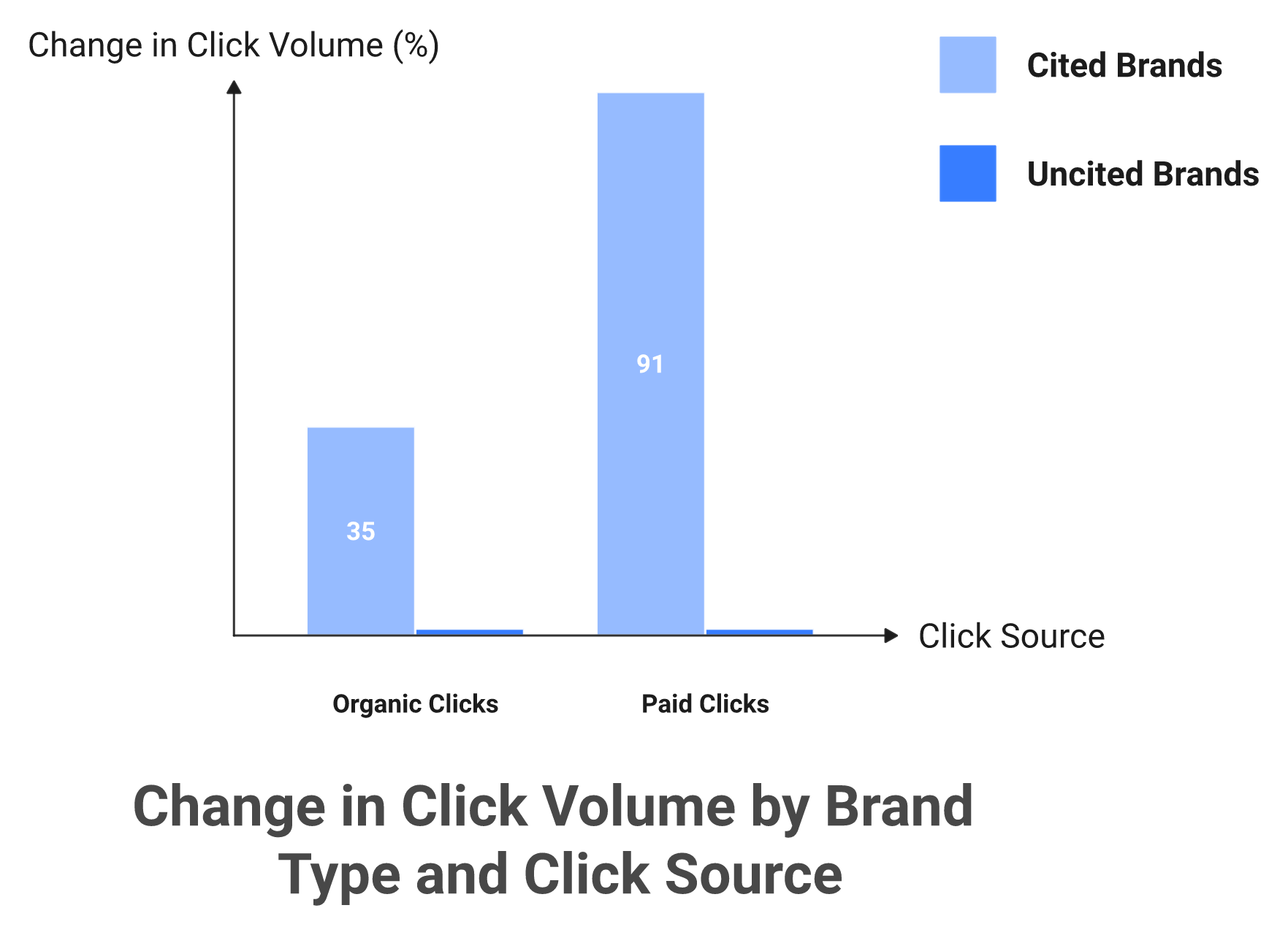
So the click did not disappear. It got concentrated. A smaller pool of clicks flows to a smaller set of cited brands, and each of those clicks carries more intent.
🎯 What this means for a pipeline owner
Read this through a revenue lens, not a traffic lens. If you own the number, raw sessions were always a proxy anyway. What you actually want is qualified buyers.
The math has inverted. Fewer total clicks, but a larger share going to the cited brand, at higher intent. As one operator put it, "the penalty for being average has never been so severe, but the payout for being extraordinary has never been higher."
One honest caveat, because the data is contested. Gartner projects search engine volume dropping 25% by 2026, while SparkToro's clickstream data shows Google search actually grew in 2024 and still handles far more queries than ChatGPT. The click is being repriced. It is not proof that Google is dead.
Q3. Is Search Traffic Really Moving to ChatGPT, Perplexity, and Gemini?
Yes, but it is additive, not a clean replacement. Semrush found ChatGPT outbound referral traffic grew 206% year over year and projects AI-search visitors will surpass traditional search visitors by 2028. Yet SparkToro clickstream data shows Google still receives roughly 373x more searches than ChatGPT and even grew in 2024. The pie is getting bigger. AI is a new slice you must claim, not proof Google is dead.
Give the direct answer first: the migration is real, and it is fast, but it is not a switch flipping off Google. Both things are true at once, and holding both is what separates a sound strategy from a panicked one.
📈 The growth is not subtle
The numbers on AI-native referral traffic are steep. Semrush analyzed more than a billion lines of clickstream data across 17 months. ChatGPT's outbound referral traffic to the rest of the web grew 206% year over year.
Their projection goes further. On current trajectory, AI-search visitors overtake traditional search visitors by 2028. That is inside most companies' current planning horizon, not a distant hypothetical, and it reshapes how we approach ChatGPT optimization.
⚖️ The counter-evidence you should not ignore
Here is where I push back on the "Google is dying" crowd. The raw volumes are wildly lopsided in Google's favor.
SparkToro's clickstream analysis shows Google still processes roughly 373x more searches than ChatGPT, and Google search actually grew in 2024. Gartner, meanwhile, predicts a 25% drop in traditional search volume by 2026. Both figures come from serious sources, and they disagree. Anyone selling you certainty here is overreaching.
The honest read is the boring one. The pie of search is getting larger, and AI chat is additive. It is a new slice, not a clean transfer.
🧭 What a founder does with this
For a founder weighing scarce budget, the takeaway is calm and clear. You do not defund Google. You fund a second front.
- Keep your BOFU Google presence intact, since that is where most volume still lives.
- Build AI-search visibility in parallel with a dedicated Perplexity optimization effort, because that slice is compounding at 206% and converts higher.
- Track share of voice, not a single rank, because the answer varies by platform and by phrasing.
This is exactly how we structure engagements at MaximusLabs. We monitor share of voice across ChatGPT, Perplexity, Gemini, and Google AI together, using Google AI and Gemini optimization, because the pie is fragmenting, and a single-rank scoreboard cannot see where your buyers actually are.
Q4. How Do AI Engines Decide Which Sources Become the Answer, and Why Do They Disagree?
AI engines do not rank pages. They retrieve and synthesize snippets, and each platform disagrees on which. A prompt triggers a live search, the engine pulls short excerpts (ChatGPT often grounds on a roughly 150-character snippet, not full text), then synthesizes an answer. Citation overlap between ChatGPT and Google is only about 35%, versus roughly 70% for Perplexity. Optimization happens at the retrieval step, per platform.
Lead with the mechanism, because it dissolves most of the confusion around "AI SEO." These engines do not rank a list of ten pages. They retrieve fragments, judge which to trust, and write one answer.
🔄 The RAG loop in plain language
The process is called Retrieval-Augmented Generation, or RAG. That just means the engine searches the live web before it writes, instead of reciting stale memory.
Four steps run every time. A user asks a question, often around 25 words in chat versus 6 words on Google. The engine performs a live search. It reads and scores the top results for trust, depth, and relevance. Then it synthesizes one answer and attaches citations to the sources it trusted most. Our AI SEO service is engineered around this exact loop.
Step three is where the entire contest is decided. Your content is being judged against every other source the engine pulled in that moment.
✂️ The snippet is the new rank
Here is the detail most teams miss. For standard web results, the engine often does not read your full page. It reads a short excerpt.
"The snippet is the new rank. ChatGPT is literally grounding answers from a 150-character excerpt. Your meta description is a direct input to ChatGPT's answer." That reframes the humble meta description from an afterthought into a primary interface with the model. If your answer is buried three scrolls down, it may never enter the retrieval pool at all, which is why technical SEO and website audit work now starts with retrievability.
🧩 Why the platforms disagree
Now the part that breaks one-size-fits-all strategies. The engines do not agree on who deserves the citation.
Citation overlap between ChatGPT and Google sits around 35%. For Perplexity and Google, it is closer to 70%. A single prompt also fans out into 8 to 12 parallel sub-queries, so you must be retrievable across many intent variations, not one.
- ChatGPT leans on Bing's index and web-wide consensus.
- Perplexity rewards recent, source-transparent, readable pages.
- Google AI Overviews pull heavily from its own top organic results.
As Krishna Kaanth puts it, "GEO is not SEO. It's a data science problem. We need to know how these LLM algorithms work to be present in the answers." Optimizing for retrieval means understanding each engine's semantic thresholds, not stuffing keywords. At MaximusLabs, we build per-platform, engineering question-headed sections and 40 to 80 word answer nuggets tuned to each engine's retrieval behavior, applying large language model optimization rather than shipping one page and hoping every model reads it the same way.
Q5. What Is the Real Difference Between SEO, GEO, and AEO?
SEO gets you ranked; GEO and AEO get you cited. Generative Engine Optimization (GEO) is optimizing to be referenced across AI-generated answers on ChatGPT, Perplexity, and Gemini. Answer Engine Optimization (AEO) focuses on becoming the direct answer in answer engines. A Princeton study showed GEO tactics, statistics, quotations, and authoritative sourcing, can lift visibility in AI answers by up to 40%. SEO is the floor; GEO is the building on top.
Walk into most marketing meetings and you will hear these three terms used as synonyms. GEO gets tossed around as "SEO with a new hat." That framing is comfortable, and it is wrong.
🧱 Why treating them as synonyms costs you
The three disciplines measure different outcomes. Blurring them means you optimize for the wrong scoreboard.
SEO chases a rank on a page of blue links. GEO chases a mention across many AI answers. AEO chases being the single answer the engine reads aloud. If you want the full breakdown, our guide on GEO vs traditional SEO maps the differences in detail.
The lever changes too. Keywords and backlinks move rank. Statistics, quotations, and web-wide consensus move citations.
📐 The stack, not the swap
Here is the resolution. These are not competitors. They stack.
| Discipline | Goal | Core metric | Main lever |
|---|---|---|---|
| SEO | Rank a page | Position on the SERP | Keywords, backlinks, on-page |
| GEO | Get cited across AI answers | Share of voice | Statistics, quotations, authority signals |
| AEO | Become the direct answer | Citation / answer inclusion | Front-loaded, extractable answers |
Krishna Kaanth frames it simply. "SEO is the foundation floor. GEO is the building on top." You still need clean technical SEO, because AI engines search before they answer. But clean SEO alone no longer wins the citation, which is why our GEO service treats it as a distinct discipline.
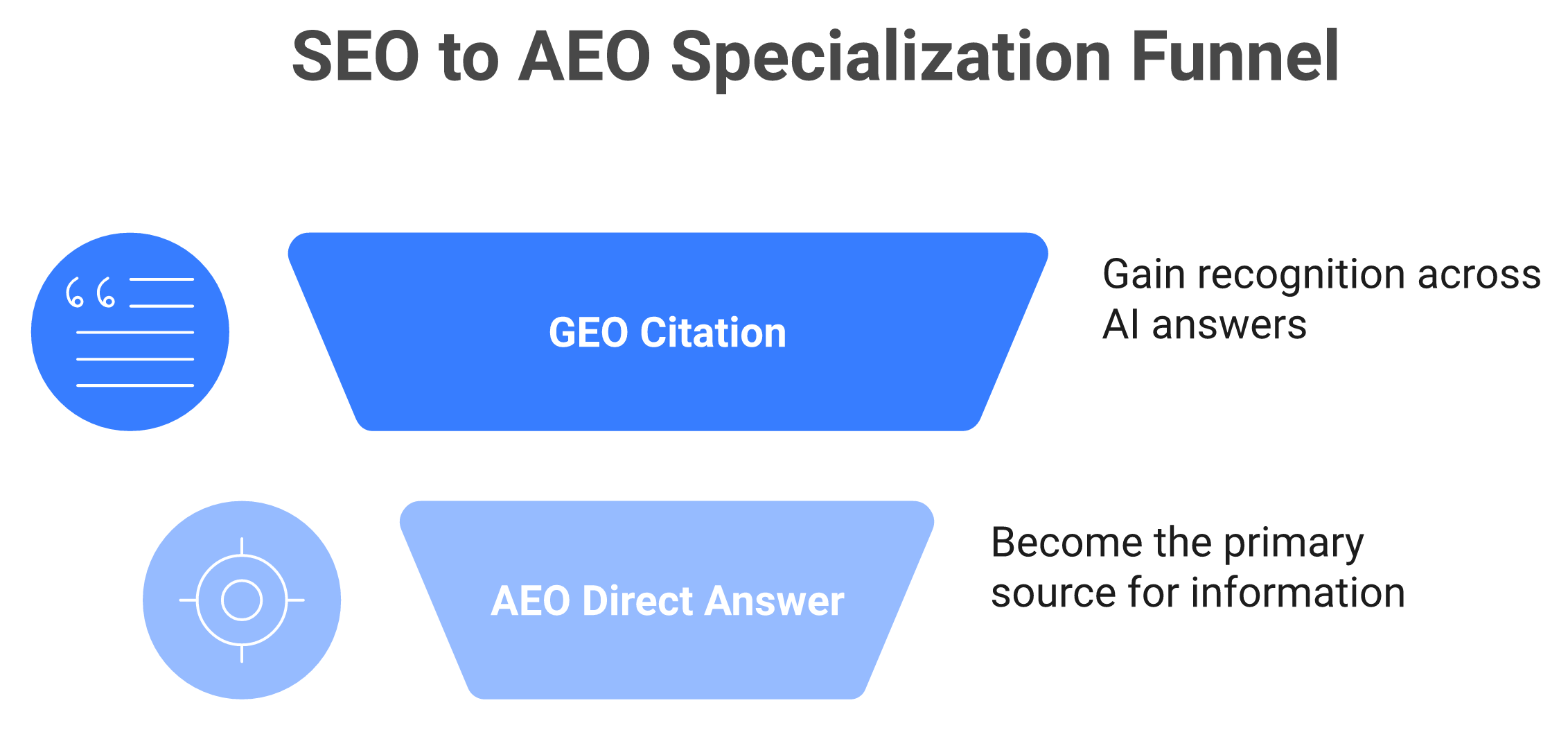
The Princeton and IIT Delhi research put numbers on the upside. Adding cited statistics, quotations, and authoritative sourcing lifted a page's visibility in generative answers by up to 40%. That is a measurable discipline, not vibes, and it is the foundation of our AEO service.
⚠️ Where most GEO providers stall
This is the gap I keep seeing. Many traditional agencies bolt "GEO" onto a services page without understanding how large language models (the systems behind ChatGPT and Gemini) actually retrieve sources. Others chase citations that never touch pipeline.
At MaximusLabs, we run revenue-focused variants we call R-GEO and RAEO, because a citation on a top-of-funnel query nobody buys from is still a vanity metric. Our R-GEO revenue-focused framework ties every optimization to bottom-of-funnel and mid-funnel queries where real buyers make decisions, which is the difference between "we got mentioned" and "we got revenue."
Q6. Why Is "Becoming the Answer" Now More Valuable Than Ranking?
Because AI-referred visitors arrive pre-sold. When ChatGPT names your brand, it transfers its own credibility to you, so the buyer skips the evaluation. Webflow reported a 6x higher conversion rate from LLM traffic versus Google search, and cited brands captured 35% more organic clicks (Seer). Fewer clicks of dramatically higher intent can beat more low-intent ones. The goal shifts from ranking a link to becoming the recommendation.
Most teams are still panicking about raw click loss. The dashboard is red, sessions are down, and the instinct is to fight for volume. That instinct is measuring the wrong thing.
🎯 The quality of the click just changed
An AI-referred visitor is not the same as a Google visitor. The journey is compressed before they ever land on you.
Chat queries average around 25 words versus roughly 6 on Google. A longer question means the engine already understood intent, filtered options, and narrowed the shortlist. The buyer arrives further down the funnel, which is exactly where our GEO/AEO for AI SaaS work concentrates.
💰 The trust transfer mechanic
Here is the part that changes the math. When ChatGPT recommends you, it stakes its own credibility on that answer. That trust transfers to your brand.
Webflow saw a 6x higher conversion rate from LLM traffic than from Google search. Seer found cited brands earned 35% more organic clicks and 91% more paid clicks. The click got more valuable, not less, and our trust-first content playbook is built to earn exactly that transfer.
Operators are feeling this shift in the wild, and not everyone is convinced yet.
"Users conducting informational searches are increasingly focused on branding. Establishing your expertise on a subject through visibility in various AI-generated overview searches is key. This approach not only boosts direct traffic but also presents a challenge, as it becomes difficult to link this traffic directly to SEO efforts."
emuwannabe, r/SEO Reddit Thread
"Informational searches are on the decline, my friend. Even if you were receiving traffic, would it truly lead to conversions? It's better to concentrate on commercial keywords."
DeckJesta, r/SEO Reddit Thread
🧭 Reframe the KPI
So the north star moves. Stop counting impressions. Start counting pipeline influenced.
"Instead of trying to be in the answer, we're trying to become the answer by becoming the most trusted source for AI." That is why at MaximusLabs we open every engagement with bottom-of-funnel content marketing service built to become the recommendation, not top-of-funnel pages built to farm pageviews that never convert.
Q7. What Does It Take to Get Cited Instead of Skipped by AI Engines?
Get cited by being retrievable, quotable, and consensus-backed. Front-load answers, because 44.2% of all AI citations come from the first 30% of the page, so content buried in long essays is invisible to retrieval. Write standalone 40 to 80 word answer nuggets, add statistics and quotations (Princeton links these to up to 40% more visibility), and earn third-party mentions. AI weights web-wide consensus over your own site's claims.
Three levers decide whether an engine cites you or skips you. Retrievability, quotability, and consensus. Everything else is detail.
⭐ Lever one: front-load or vanish
Placement on the page matters more than length. Buried answers do not get pulled.
Research on generative citations found that 44.2% of all AI citations come from the first 30% of the page. If your answer sits three scrolls down, the retrieval step may never reach it. Put the answer first, then explain, a principle our citation optimization guide covers step by step.
✂️ Lever two: write to be quoted
Engines lift short, self-contained passages, not whole essays. So write passages that stand alone.
- Open each section with a 40 to 80 word answer nugget that fully answers the question.
- Add a specific statistic or a named quotation, since the Princeton study tied these to up to 40% more visibility.
- Treat your meta description as a real answer, because it can feed the model directly.
✅ Lever three: earn outside mentions
This is the lever most self-published blogs ignore. AI trusts what the wider web says about you more than what you say about yourself, which is where Reddit and forum AEO earns its keep.
Krishna tells a story that proves it. "Perplexity summarized our article, and then the summary said that we were Oxford researchers. None of us attended Oxford." The engine pulled a claim from web-wide consensus, not the source page. Consensus, right or wrong, outweighs self-published data.
Practitioners are already leaning on this, though the tactics are messy.
"My suggestion is to start diversifying your content."
r/SEO Reddit Thread
"For businesses focused on tutorials, are you considering incorporating video elements in your AI overview? This approach remains one of the most effective methods to attract clicks!"
Inside-Gur-3001, r/SEO Reddit Thread
⏰ Your Monday checklist
Start small and specific. Pick one money page, move the answer into the first 30%, and add one hard statistic with a source. Then find two cited Reddit or YouTube threads for your topic and add genuine value there. This earned-mention layer is exactly what we build at MaximusLabs through AI citation acquisition tactics across G2, Reddit, YouTube, and guest placements, so the consensus AI reads already names you.
Q8. Which Technical SEO Moves Actually Matter for AI Search, and Which Are a Waste?
Most technical AEO work is a security blanket; a few moves are decisive. What matters: making content reachable, so render critical text and reviews in HTML, not async JavaScript, and surface hidden attribute data into text and FAQs so retrieval can reach it. IndexNow can compress content-to-citation time to 24 to 72 hours. What rarely moves revenue: chasing Core Web Vitals and 50-page audits that produce PDFs, not pipeline.
Every quarter, some team commissions a giant technical audit. Fifty pages, a red-yellow-green grid, and a big invoice. Then traffic does not move.
⚠️ The comfortable work that does nothing
Much of technical AEO is theater. It feels productive and rarely changes the outcome.
Ethan Smith of Graphite put it bluntly. Technical AEO "will likely create significant work with little to no impact," and "in 15 years, I've never seen Core Web Vitals drive a traffic increase." Core Web Vitals (Google's page-speed and stability scores) are a hygiene factor, not a growth lever, a point our technical SEO and website audit keeps in perspective.
Operators feel the same fatigue with box-checking work.
"Most agencies charge overpriced retainers for work that's not deserving of a retainer."
r/Entrepreneurs Reddit Thread
🔧 The moves that actually decide retrieval
A few technical choices genuinely control whether an engine can read you. They all come down to reachability.
- Render critical text and reviews in HTML, not asynchronous JavaScript that loads late. Smith showed that turning JavaScript off made reviews vanish, meaning the engine never saw them.
- Pull hidden attribute data (closure type, fabric, neck style) out of dropdowns and into visible text and FAQs so retrieval can grab it.
- Use IndexNow, a protocol that pings search engines the moment you publish, to compress content-to-citation time to roughly 24 to 72 hours.
- Unblock AI crawlers like GPTBot in your robots.txt, or you forfeit the citation entirely.
Getting crawler access right is a project in itself, which is why we treat managing AI crawlers like GPTBot and Google-Extended as a first-order technical task.
💸 The honest debate on schema
Schema markup (code that labels your content for machines) splits the experts. I will not pretend it is settled.
SALT.agency calls schema "a hygiene factor at best," while Surfer Academy argues it "increases odds significantly." My read is that schema helps machines parse you, but it never rescues content that is buried or unreachable. Fix reachability first, then layer in schema markup basics.
"AI Overviews are a component of a design approach aimed at enabling clickless searches."
Nyodrax, r/SEO Reddit Thread
This is why our technical work at MaximusLabs is built for the AI era, HTML-first rendering, crawler access, and IndexNow, through technical GEO implementation rather than a 50-page audit that produces a PDF instead of pipeline.
Q9. How Do You Measure AI-Search Visibility When There's No "Rank #1"?
You measure share of voice, not a single rank. Because a prompt fans out into 8 to 12 sub-queries and citations vary by platform, track how often your brand appears across thousands of question variants on ChatGPT, Perplexity, Gemini, and Google AI. Pair that with a GA4 AI-referral segment and a "How did you hear about us?" survey field. The metric that matters is pipeline influenced, not impressions.
Here is the direct answer before the detail. The old scoreboard, one keyword and one rank, cannot see AI search. You need a different instrument.
📊 Why a single rank is dead
A rank assumes one query returns one ordered list. AI search does not work that way. A single prompt fans out into 8 to 12 parallel sub-queries behind the scenes.
The answer also changes by platform and by phrasing, as covered in the retrieval section earlier. So "am I number one" is the wrong question. "How often am I the named source across many variants" is the right one, which is why our GEO measurement and metrics approach starts there.
🧱 The three-layer measurement stack
Build measurement in three layers. Each one answers a different question, and together they connect visibility to revenue.
- Share of voice: track how often your brand is cited across thousands of question variants on ChatGPT, Perplexity, Gemini, and Google AI. This is your visibility baseline.
- GA4 AI-referral segment: in Google Analytics 4, build a custom segment filtering referrals from chatgpt.com, perplexity.ai, and gemini. This shows what AI traffic does on your site.
- The "How did you hear about us?" field: add it to your demo and signup forms. It catches the pipeline that AI influenced but never passed a clean referral link.
Last-touch attribution works better now, because AI answers include clickable links you can actually track. Setting up the tracking layer cleanly is part of our AI search visibility and brand mention tracking work.
💰 Tie every layer back to revenue
Do not let this become another vanity dashboard. Each layer must ladder up to pipeline.
Focus matters here. As Ethan Smith of Graphite notes, "19 out of 20 landing pages drive roughly 85% of all your traffic," so measure the pages that actually convert, not all of them. This is the logic behind our GEO ROI and revenue attribution model, and our R-GEO revenue-focused framework ties every citation to pipeline.
I will hedge one thing. Attribution for AI search is still messy, and anyone claiming perfect measurement is overselling. This is exactly why at MaximusLabs we track citation rate against named competitors across thousands of question variants and multiple platforms, then map it to pipeline, so the number on the board is revenue influenced, not impressions, using our GEO service.
Q10. What Should You Do Monday Morning to Stay Visible in AI Search?
Start where revenue is closest. Audit your 10 money queries in ChatGPT and Perplexity and note whether you are named. Front-load answers into the first 30% of each key page, rewrite meta descriptions as standalone answers, unhide reviews and attribute data from JavaScript, and seed authentic mentions on the Reddit and YouTube threads AI already cites. Then track share of voice, not impressions.
You do not need a six-month project to start. You need a prioritized list you can begin today, ordered by how close each move sits to revenue.
⏰ The Monday checklist
Work top to bottom. Stop when the day ends, and resume tomorrow.
- Audit your 10 highest-intent queries in ChatGPT and Perplexity. Note where you are named, where a competitor is named, and where nobody is.
- Front-load the answer into the first 30% of each money page, since that is where most AI citations are pulled from.
- Rewrite meta descriptions as standalone, complete answers, because they can feed the model directly.
- Unhide reviews and product attributes from asynchronous JavaScript so retrieval can actually read them.
- Seed genuine, useful comments on the Reddit and YouTube threads AI already cites for your topic.
Krishna's zero-budget version is blunt. "Add genuine value, and you'll find your way into AI answers." You do not have to outspend anyone to get named, and our Reddit and forum AEO playbook operationalizes exactly that.
🔮 The Sample Set Binary Game
Here is the stakes cue for why this matters now. When a buyer asks AI for solutions in your category, it names 5 to 10 players. There is no page two.
You are either in that set or you do not exist for that buyer. That is the binary game. Operators are still arguing about how permanent this shift is, which is fair, and our GEO competitive positioning work is built to win that sample set.
"AI Overviews are hurting website owners, and I predict that many niche and affiliate sites will become obsolete within the next year or two."
Chastic, r/SEO Reddit Thread
"I'd imagine most of your traffic is being taken by the AI overview on the SERP pages. My suggestion is to start diversifying your content."
r/SEO Reddit Thread
🔭 What I am sitting with next
The horizon I keep thinking about is agentic commerce, where an AI agent buys on the user's behalf. Picture a Ghost Kitchen. Your website is the dining room buyers rarely enter, and the agent is the delivery driver pulling structured data straight from your kitchen.
Microsoft's Web IQ grounding already returns results at roughly 164ms and about 2.5x faster than prior methods, which hints at how fast agents will transact. Preparing brands for this is the whole point of our agentic commerce service.
So my open question is this. When agents, not humans, do the choosing, does your brand still make the sample set? That is the problem we work on at MaximusLabs, helping brands become the answer with cost-effective, scalable content in the founder's own voice, and if you are sitting with the same question, our contact us page is the place to compare notes.
Frequently asked questions
Why are my Google clicks dropping even though my rankings are stable?
Your rankings can hold while your clicks collapse, because AI Overviews intercept the visit before it reaches you. Pew Research found clicks fall from 15% to 8% when a summary appears, and only 1% of people click a source link inside that summary. Ahrefs measured a roughly 58% click-through-rate drop for the position-one page when an AI Overview loads above it. Over 70% of Google searches now end without a click to any website. Even queries without an Overview are softening, with Seer recording a 41% decline on those too. The mechanism is simple. The AI reads your page, writes the answer, and the searcher never leaves the results screen, so you become a data donor feeding a machine that rarely sends anyone back. The fix is not ranking higher; it is becoming the synthesized answer. We break down the mechanics in our guide to the zero-click search brand economy , where we show how to defend revenue when the click disappears.
What is actually happening to click-through rates across AI search?
The click is being repriced, not simply erased. It is moving to whoever the AI decides to name, so a smaller pool of clicks flows to a smaller set of cited brands, and each click carries more intent. Pew: clicks fall from 15% to 8% with an AI summary, and only 1% click inside it. Seer: organic CTR down 61% and paid down 68% on AI Overview queries, with a 41% drop even on non-Overview queries. Seer upside: brands cited inside the Overview earned 35% more organic and 91% more paid clicks. So the losses and the gains are the same story from two sides. Being named is now worth more than it was in the old ten-blue-links world. We stay honest about the debate too, since SparkToro clickstream data shows Google search actually grew in 2024, which means the click is repriced rather than dead. To engineer content that earns those named citations, see our approach to citation-worthy content for AI .
Is search traffic really moving to ChatGPT, Perplexity, and Gemini?
Yes, but it is additive, not a clean replacement. Both facts are true at once, and holding both is what separates a sound strategy from a panicked one. Semrush found ChatGPT outbound referral traffic grew 206% year over year and projects AI-search visitors will surpass traditional search visitors by 2028. SparkToro clickstream data shows Google still receives roughly 373x more searches than ChatGPT and even grew in 2024. Gartner, meanwhile, predicts a 25% drop in traditional search volume by 2026. The honest read is the boring one. The search pie is getting bigger, and AI chat is a new slice you must claim rather than proof Google is dead. For a founder with scarce budget, that means keeping your Google presence intact while funding a second front in parallel, then tracking share of voice across every platform. We structure exactly this dual-front plan inside our GEO service , monitoring visibility across ChatGPT, Perplexity, Gemini, and Google AI together.
What is the real difference between SEO, GEO, and AEO?
SEO gets you ranked; GEO and AEO get you cited. They stack rather than compete, so you need all three. SEO chases a rank on a page of links, using keywords, backlinks, and on-page work. GEO (Generative Engine Optimization) earns mentions across AI answers, using statistics, quotations, and authority signals. AEO (Answer Engine Optimization) makes you the direct answer, using front-loaded, extractable content. A Princeton and IIT Delhi study showed that adding cited statistics, quotations, and authoritative sourcing lifted a page's visibility in generative answers by up to 40%, so this is a measurable discipline, not vibes. Clean technical SEO is still the foundation floor, because AI engines search before they answer, but it no longer wins the citation alone. Where many providers stall is chasing citations that never touch pipeline, which is why we run revenue-focused variants tied to bottom-of-funnel queries. See our GEO vs traditional SEO comparison for the full breakdown.
Why is becoming the answer now more valuable than ranking?
Because AI-referred visitors arrive pre-sold. When ChatGPT names your brand, it stakes its own credibility on that answer, and that trust transfers to you, so the buyer skips much of the evaluation. Chat queries average around 25 words versus roughly 6 on Google, meaning intent is already understood and the shortlist already narrowed. Webflow reported a 6x higher conversion rate from LLM traffic than from Google search. Seer found cited brands earned 35% more organic and 91% more paid clicks. So fewer clicks of dramatically higher intent can beat more low-intent ones, and the north star moves from impressions to pipeline influenced. The goal shifts from ranking a blue link to becoming the recommendation the engine hands the buyer. That is why we open every engagement with bottom-of-funnel content built to become the answer, guided by our trust-first content playbook .
What does it take to get cited instead of skipped by AI engines?
Get cited by being retrievable, quotable, and consensus-backed. These three levers decide the outcome, and everything else is detail. Retrievable: front-load answers, because research found 44.2% of AI citations come from the first 30% of the page. Quotable: write standalone 40 to 80 word answer nuggets, and treat your meta description as a real answer, since ChatGPT often grounds on a short excerpt. Consensus-backed: earn third-party mentions, because AI trusts what the wider web says about you more than what you say about yourself. Adding a specific statistic or named quotation also ties to up to 40% more visibility, per the Princeton study. The lever most self-published blogs ignore is earned mentions, so start by adding genuine value on the Reddit and YouTube threads AI already cites for your topic. We operationalize this earned-mention layer through our AI citation acquisition tactics across G2, Reddit, YouTube, and guest placements.
How do I measure AI-search visibility when there is no rank number one?
You measure share of voice, not a single rank, because a prompt fans out into 8 to 12 sub-queries and citations vary by platform. Build measurement in three layers that each ladder up to revenue. Share of voice: track how often your brand is cited across thousands of question variants on ChatGPT, Perplexity, Gemini, and Google AI. GA4 AI-referral segment: filter referrals from chatgpt.com, perplexity.ai, and gemini to see what AI traffic does on your site. How did you hear about us: add this field to demo and signup forms to catch pipeline that AI influenced but never passed as a clean referral. Focus on the pages that matter, since Ethan Smith of Graphite notes 19 out of 20 landing pages drive roughly 85% of traffic. We stay honest that AI attribution is still messy, so anyone claiming perfect measurement is overselling. We track citation rate against named competitors and map it to pipeline inside our GEO measurement and metrics system.